Turbocharger repair across Ukraine
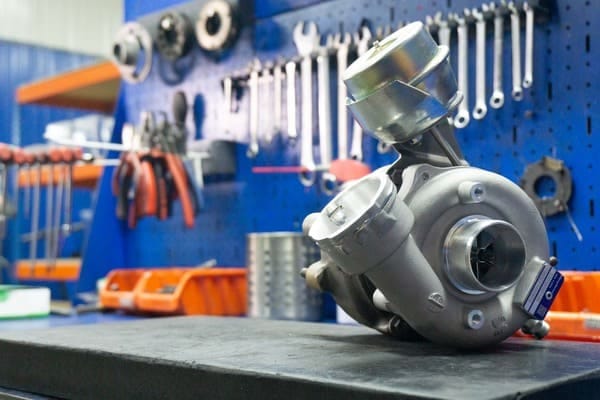
We repair removed turbochargers: inspection, cartridge leak test, boost pressure check and bench setup.
Price: from 4,500 UAH
When to bring it in
- Loss of power and sluggish accelerationThe car pulls poorly, especially uphill and under load.
- Whistling, whining or grinding when acceleratingA sign of worn bearings, a damaged compressor wheel or an air leak after the turbo.
- Blue or grey smoke from the exhaustOil gets into the intake through worn turbo seals.
- Black smokeThe engine gets too little air because of weak boost, and the fuel doesn't burn completely.
- Higher oil consumption with no visible leaks
- Oil in the hoses and intercoolerA result of excessive turbo shaft play.
- Check Engine light on or the engine goes into limp mode
- Jerks and hesitation when you press the acceleratorUsually caused by the turbo's variable geometry or actuator.
What's included
- Inspection
- Cartridge leak test
- Boost pressure check
- Bench setup
How we repair it
We disassemble the turbocharger, inspect the parts, and test the cartridge for leaks and the boost pressure. After the repair we set the turbocharger up on the bench.
Price
The cost depends on the turbocharger's condition; we quote the exact price after inspection.
Estimate the cost
FAQ
How do I send parts for repair?
Remove the pump or injectors, plug the openings, pack them tightly and ship via Nova Poshta. Add a note with your phone number and car model. See the Delivery & payment page for details.
Do you give a warranty?
Yes, on the work done and installed parts. The terms are stated in the report.
When will I know the price?
After the bench test we call you to agree the price. We never start a repair without your approval.
Why check the turbocharger, injectors and pump together?
The turbocharger, injectors and high-pressure pump work as one system. Worn injectors flood the cylinders with excess fuel, which overloads the turbocharger. A worn pump contaminates the whole fuel system with metal shavings and damages the injectors. A faulty turbocharger delivers the wrong boost, so the engine runs with the wrong air-fuel balance. Repairing just one part often means the problem comes back, so we recommend having these units checked together: on the bench we find the root cause instead of only fixing the symptom.
What should I do if I notice signs of a fault?
Don't put it off: a small fault quickly becomes an expensive one. Don't rely on “miracle additives”: they don't restore worn parts. Don't drive if you hear grinding, see heavy smoke or the oil pressure drops. Get in touch: we'll advise you, test the removed parts on the bench and tell you honestly whether a repair is needed and which one.