VAG PD unit injector repair across Ukraine
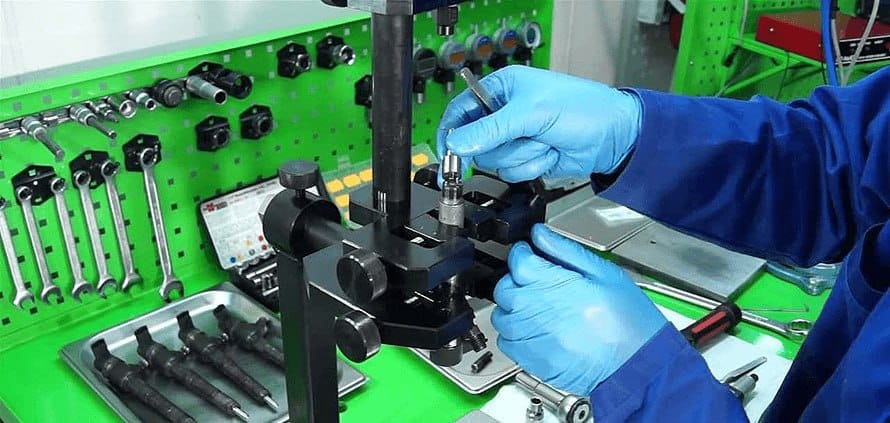
We restore removed VAG PD (Pumpe-Düse) 1.9 and 2.0 TDI unit injectors: bench testing, repair kits, nozzles and valves, calibration.
Price: from 1,300 UAH
When to bring it in
- Hard starting, especially when the engine is hot
- Rough idleThe engine misfires, vibrates, and the revs hunt.
- Higher fuel consumption with no change in driving style
- Black or white smoke from the exhaust
- Harsh, “tractor-like” engine runningA metallic knock appears that wasn't there before.
- Loss of power and acceleration
- Smell of unburnt fuel in the exhaust
- Fuel in the oilThe oil level rises and the oil gets thin. This is a serious sign: do not drive the car.
What's included
- Bench test
- Seal and repair kit replacement
- Nozzle replacement if needed
- Test report
What we do
We bench-test the unit injectors, check delivery and sealing, replace seals and repair kits and, if needed, the nozzle and valve. After the repair we test again and give you a report.
Which ones we accept
VAG 1.9 / 2.0 TDI PD unit injectors. Truck PDE unit injectors are covered by a separate service, “Truck injectors, PLD units, Smart”.
Estimate the cost
- VAG PD unit injector repair1,300 UAH × 45,200 UAH
FAQ
How do I send parts for repair?
Remove the pump or injectors, plug the openings, pack them tightly and ship via Nova Poshta. Add a note with your phone number and car model. See the Delivery & payment page for details.
Do you give a warranty?
Yes, on the work done and installed parts. The terms are stated in the report.
When will I know the price?
After the bench test we call you to agree the price. We never start a repair without your approval.
Why check the turbocharger, injectors and pump together?
The turbocharger, injectors and high-pressure pump work as one system. Worn injectors flood the cylinders with excess fuel, which overloads the turbocharger. A worn pump contaminates the whole fuel system with metal shavings and damages the injectors. A faulty turbocharger delivers the wrong boost, so the engine runs with the wrong air-fuel balance. Repairing just one part often means the problem comes back, so we recommend having these units checked together: on the bench we find the root cause instead of only fixing the symptom.
What should I do if I notice signs of a fault?
Don't put it off: a small fault quickly becomes an expensive one. Don't rely on “miracle additives”: they don't restore worn parts. Don't drive if you hear grinding, see heavy smoke or the oil pressure drops. Get in touch: we'll advise you, test the removed parts on the bench and tell you honestly whether a repair is needed and which one.